Retail Invoice Template: A Designer's Guide to a Professional Toolkit
Every business transaction tells a story, and the invoice is often the final, professional chapter. A cluttered, generic bill can undermine weeks of excellent work, leaving a forgettable impression. A well-designed invoice, however, reinforces your brand's attention to detail and professionalism. This is precisely the problem the Retail Invoice Template solves, offering a cohesive, multi-format package designed for businesses that value both efficiency and aesthetic consistency. It's more than just a form; it's a final touchpoint that strengthens your brand identity.
Anatomy of a Complete Design Package
When you invest in a design asset, you expect versatility and clarity. This package delivers exactly that, providing four distinct files to cover every stage of your workflow. Understanding what's inside helps you leverage the template to its full potential, whether you're a solo entrepreneur or part of a marketing team.
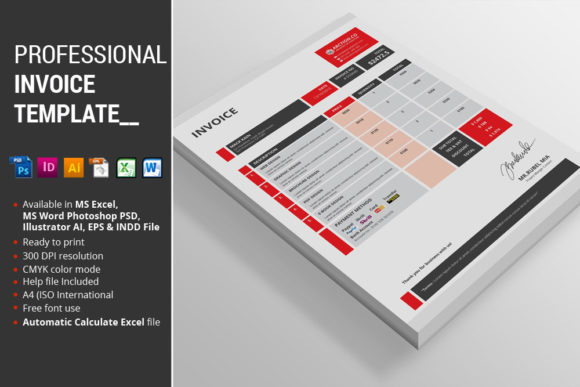
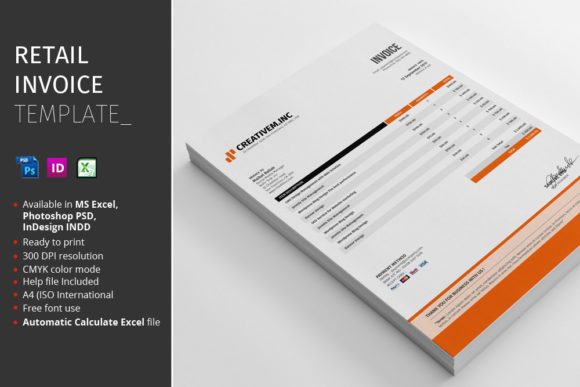
- 1 MS Excel 2010 File: This is your workhorse for daily operations. The true power here is the automatic calculation feature. Formulas are pre-built for subtotals, taxes, and grand totals, eliminating manual math errors and saving significant time. It’s a practical tool built for real-world use.
- 1 Photoshop PSD File: For designers and marketers, this file offers complete creative control. Every element resides on a fully organized layer, allowing you to tweak colors, adjust typography, or integrate the invoice seamlessly into a larger brand mockup or presentation. The CMYK color mode ensures colors print accurately, a critical detail for physical mailings.
- 1 InDesign INDD File: This is the professional publisher's choice. InDesign provides superior control over layout and typography for multi-page documents. If your business issues detailed invoices with itemized lists, terms, and conditions, this file format allows for the most polished and scalable result.
- Instructions PDF: A thoughtful inclusion that bridges the gap between purchase and productivity. This guide likely covers font installation, file access, and basic customization steps, ensuring you aren't left guessing. It often contains the crucial fonts link needed to replicate the exact design.
Where Professional Design Meets Practical Application
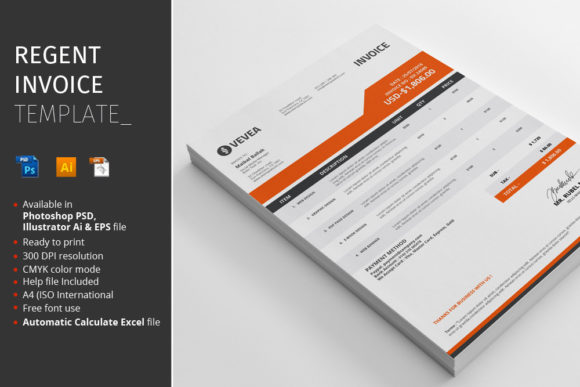
The visual language of the Retail Invoice Template speaks in a clear, modern dialect. Its style leans towards clean minimalism, using ample white space and structured grids to present information without overwhelming the recipient. The personality is one of competence and trustworthiness—it doesn't shout for attention but confidently commands respect through its organized layout. This makes it an excellent fit for a wide array of industries.
Consider its application across different business contexts:
- For Creative Agencies & Freelancers: Sending a beautifully designed invoice to a client after a branding project or web design job is the epitome of practicing what you preach. It reinforces your capabilities and justifies your premium service.
- For E-commerce & Retail Brands: Consistency is king. Using this template ensures every customer touchpoint, from the website to the packaging slip to the invoice, shares a unified brand identity. The A4 (ISO International) size makes it globally compatible.
- For Consultants & Service Providers: Clarity and professionalism build trust. A well-structured invoice with clear terms and automatic totals reflects the meticulous nature of your consulting work, reducing queries and speeding up payment.
The included premium font plays a vital supporting role. While the template itself is the star, the typeface—likely a clean sans serif font or a balanced serif font—is chosen for maximum readability in both digital and print formats. This thoughtful pairing of layout and typography ensures your contact information, line items, and payment terms are instantly legible, which directly influences how quickly you get paid.
Integrating the Template into Your Workflow
Choosing the right tool is only half the battle; using it effectively is the other. Before diving in, take a moment to evaluate the template's fit for your specific needs. Open the Excel file and test its calculation formulas with your typical product or service pricing. Does it accommodate your tax structure? Can you easily add or remove rows? This hands-on test is more valuable than any description.
For visual customization, the Photoshop and InDesign files are your playground. Here’s a practical approach:
- Test Font Pairings: The provided font is a great starting point, but your brand may have established typefaces. Experiment with pairing the template's heading font with your body copy font to maintain brand consistency. This is where understanding basic font pairing principles helps—contrast a bold display font with a simple, readable body font.
- Review All Included Styles: Explore the organized layers in the PSD file. Are there alternate color options beyond the primary Red palette? Can you easily swap in your company logo? The layer structure should make these adjustments straightforward.
- Prioritize Readability: No matter how beautiful the design, an invoice must be functional. Ensure your final version has high contrast between text and background. Check that the font size, especially for smaller details like terms and conditions, remains legible when printed on a standard office printer.
Finally, consider the commercial licensing. For any commercial font or design asset, confirm the license permits your intended use—whether for client work, internal use, or products for sale. The Instructions PDF should clarify this, but it's a critical step for avoiding legal headaches down the line. This Retail Invoice Template isn't just a file; it's a component of your professional toolkit, designed to save you time, reduce errors, and project an image of competence with every bill you send.